Esophageal Motility Disorders Treatment in South Delhi
Esophageal motility disorders are conditions in which the muscles and nerves of the esophagus fail to move food and liquids normally toward the stomach. As a result, swallowing becomes difficult and patients may experience discomfort while eating or drinking.
At Delhi Gastrocare, based at Fortis Escorts Hospital, Okhla Road, South Delhi, esophageal motility disorders are accurately diagnosed using esophageal manometry. Depending on the specific type and severity of the disorder, treatment may include dietary modifications, medications, or advanced endoscopic procedures to improve swallowing and relieve symptoms.
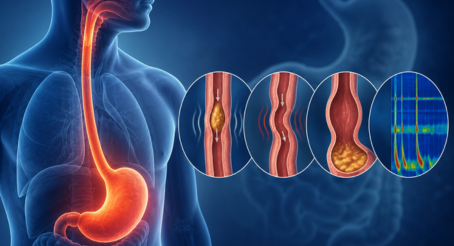
What Are Esophageal Motility Disorders?
Normal swallowing depends on peristalsis—coordinated, wave-like muscle contractions that move food from the throat into the stomach. Esophageal motility disorders develop when this coordination is disrupted because the muscles contract too weakly, too forcefully, or out of sequence. This group of conditions includes achalasia, diffuse esophageal spasm, ineffective esophageal motility (IEM), and jackhammer (nutcracker) esophagus. Early diagnosis is essential to prevent complications and restore comfortable swallowing.
What Are the Symptoms of Esophageal Motility Disorders?
Symptoms vary depending on the specific type of esophageal motility disorder, but the most common signs include:
Difficulty Swallowing
Trouble swallowing solids, liquids, or both due to abnormal esophageal muscle movement.
Food Sticking Sensation
A feeling that food is stuck behind the breastbone after swallowing.
Chest Pain
Chest pain or discomfort that may resemble heart-related pain and requires evaluation.
Regurgitation
Backflow of undigested food into the mouth, especially after meals or when lying down.
Persistent Heartburn
Heartburn-like symptoms that do not improve with standard acid reflux medications.
Unintentional Weight Loss
Weight loss in advanced cases due to prolonged difficulty swallowing and reduced food intake.
What Causes Esophageal Motility Disorders?
Esophageal motility disorders develop when the nerves or smooth muscles responsible for moving food through the esophagus do not function properly. These conditions may result from autoimmune disorders, nerve degeneration, connective tissue diseases, viral infections, or, in many cases, have no clearly identifiable cause. They are not caused by diet or eating habits alone.
- Dysfunction of the nerves controlling the esophagus
- Abnormal smooth muscle function
- Autoimmune disorders affecting esophageal nerves
- Nerve degeneration with aging or unknown causes
- Connective tissue diseases such as scleroderma
- Previous viral infections that damage nerve cells
- Idiopathic (no identifiable cause) in many patients
- Not caused by diet or eating habits alone
How Are Esophageal Motility Disorders Diagnosed?
A combination of advanced diagnostic tests helps identify the specific type of esophageal motility disorder and guides the most effective treatment plan.
-
Esophageal Manometry
The primary diagnostic test for esophageal motility disorders. A thin catheter measures the pressure, strength, and coordination of esophageal muscle contractions to identify abnormal swallowing patterns.
-
Barium Swallow X-ray
A liquid barium solution is swallowed while X-rays are taken to observe how it moves through the esophagus, helping detect abnormal contractions, narrowing, or delayed emptying.
-
Upper GI Endoscopy
A flexible endoscope is used to examine the esophagus and stomach, helping rule out structural abnormalities such as strictures, inflammation, tumors, or other causes of swallowing difficulty.
Frequently Asked Questions
Find answers to common questions about esophageal motility disorders, their diagnosis, treatment, and when to seek expert gastroenterology care.
No. Achalasia is one specific type of esophageal motility disorder. Other conditions, such as diffuse esophageal spasm, jackhammer esophagus, and ineffective esophageal motility, involve different patterns of muscle dysfunction and are diagnosed using esophageal manometry.
Most esophageal motility disorders cannot be completely cured but can be effectively managed. Treatment focuses on relieving symptoms, improving swallowing, and enhancing quality of life through dietary changes, medications, or advanced endoscopic and surgical procedures when required.
Esophageal chest pain can closely resemble heart-related chest pain. Anyone experiencing new, severe, or unexplained chest pain should first seek immediate medical evaluation to rule out a cardiac emergency before considering an esophageal cause.
If you have ongoing difficulty swallowing, frequent episodes of food getting stuck, unexplained chest pain, or persistent regurgitation, consult a gastroenterologist promptly. At Delhi Gastrocare, Fortis Escorts Hospital, Okhla Road, South Delhi, advanced esophageal manometry and personalized treatment plans are available for accurate diagnosis and effective management.