What Is ERCP?
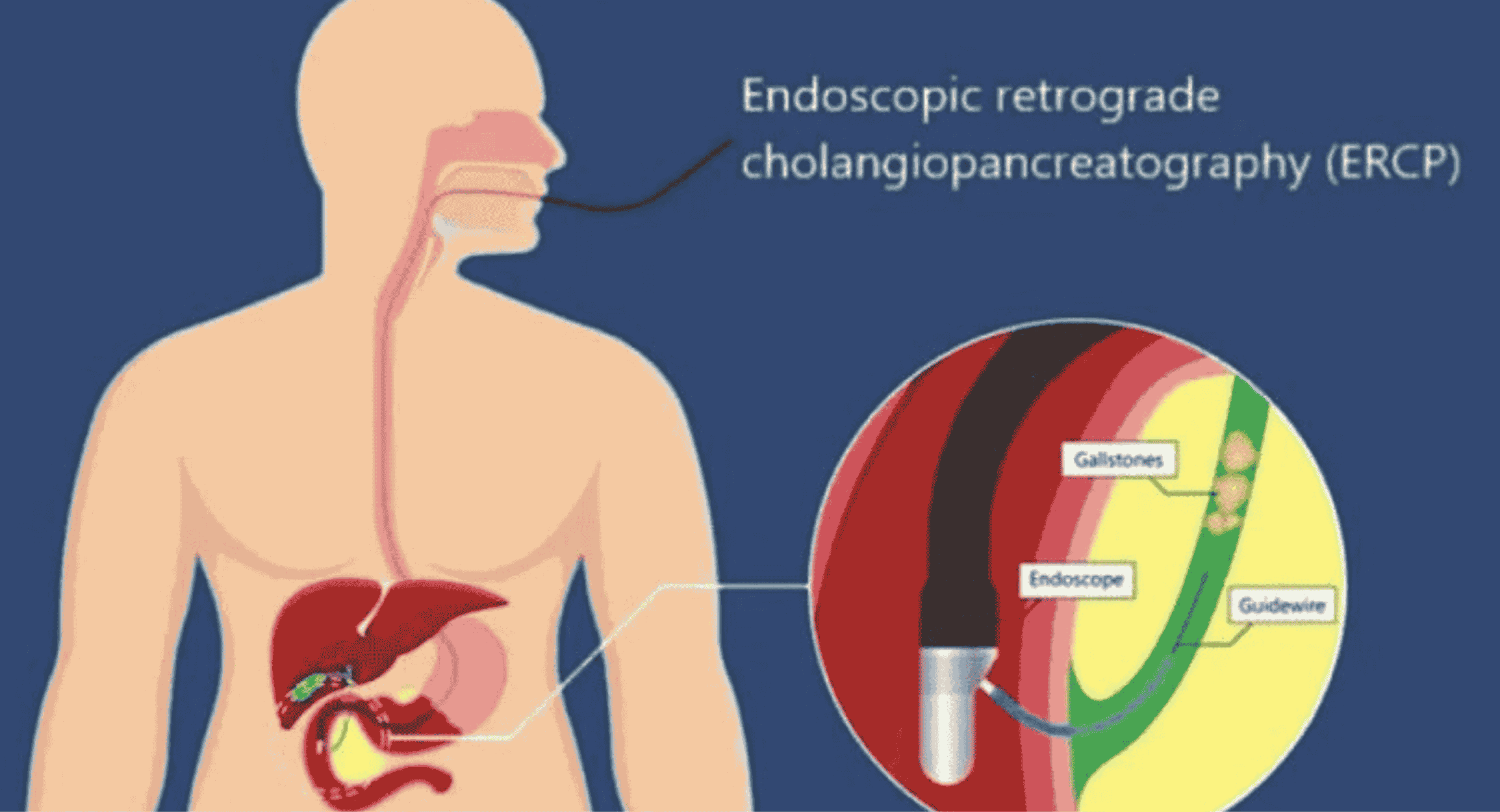
ERCP (Endoscopic Retrograde Cholangiopancreatography) is a specialised procedure used to diagnose and treat problems affecting the bile ducts, pancreas, and gallbladder. It combines endoscopy with X-ray imaging to examine the bile and pancreatic ducts and identify blockages, stones, or abnormalities.
A flexible endoscope is passed through the mouth into the stomach and small intestine, and a contrast dye is injected into the ducts so they show up clearly on X-ray. Because ERCP is both diagnostic and therapeutic, many problems it identifies — such as a stone blocking the duct — can be treated in the same procedure, without the need for separate surgery.
Conditions Treated with ERCP
ERCP treatment in Delhi is most often used for the following conditions:
Bile Duct Stones
ERCP for bile duct stones in Delhi allows doctors to locate a stone that has moved out of the gallbladder into the bile duct and remove it directly during the procedure, often resolving the blockage without surgery.
Pancreatic Duct Stones
ERCP for pancreatic duct stones in Delhi is used when stones form within the pancreatic duct itself, often in patients with chronic pancreatitis, causing pain and obstructing normal drainage; ERCP can extract these stones and relieve the blockage.
Bile Duct Strictures
ERCP for bile duct stricture treatment in Delhi addresses narrowing of the bile duct, which may result from inflammation, prior surgery, or a tumour, by widening the duct and placing a stent to keep it open.
Obstructive Jaundice
ERCP for jaundice treatment in Delhi is used when yellowing of the skin and eyes is caused by a blockage in the bile duct — from a stone, stricture, or tumour — preventing bile from draining normally; relieving the blockage during ERCP often resolves the jaundice.
Bile Leaks and Post-Surgical Complications
ERCP can identify and treat bile leaks that sometimes occur after gallbladder or liver surgery, by placing a stent to redirect bile flow while the leak heals.
Why ERCP Is Recommended
Doctors typically recommend ERCP treatment in Delhi for one or more of the following reasons:
- Removing gallstones lodged in the bile duct
- Relieving blockages caused by strictures or tumours
- Diagnosing the cause of unexplained jaundice
- Treating chronic pancreatitis complications
- Placing stents to keep narrowed ducts open
- Investigating and treating bile leaks after surgery
- Collecting tissue or fluid samples to investigate suspicious findings
What Happens During the ERCP Procedure
An ERCP procedure in Delhi is typically performed as follows:
- Sedation or anaesthesia is given to keep the patient comfortable throughout
- A flexible endoscope is passed through the mouth, into the stomach and small intestine
- The doctor locates the opening where the bile and pancreatic ducts drain
- A contrast dye is injected into the ducts, and X-ray images are taken to map any blockage, stone, or narrowing
- Treatment is carried out in the same sitting where possible — removing stones, placing a stent, or performing a sphincterotomy
- The procedure usually takes 30 to 90 minutes, depending on what is found and treated
Endoscopic Sphincterotomy
Endoscopic sphincterotomy in Delhi is a small cut made in the muscle (sphincter) that controls the opening of the bile or pancreatic duct into the intestine. Widening this opening makes it easier to remove stones or allow the duct to drain properly, and is one of the most common therapeutic steps performed during ERCP.
Biliary Stent Placement
Biliary stent placement in Delhi involves inserting a small tube into a narrowed or blocked bile duct to hold it open and allow bile to drain normally. Stents are commonly used for strictures, tumours pressing on the duct, or as a temporary measure while a leak heals, and depending on the cause, may be temporary or, in some cases, need periodic replacement.
Benefits of ERCP
ERCP provides several vital diagnostic and therapeutic advantages for treating disorders of the biliary and pancreatic systems without invasive surgery.
- Combines diagnosis and treatment in a single procedure
- Minimally invasive alternative to open surgery for many bile and pancreatic duct problems
- Can relieve jaundice and pain quickly by resolving the underlying blockage
- Allows precise, image-guided treatment of stones, strictures, and leaks
- Usually performed as a day procedure or with a short hospital stay
- Reduces the need for more invasive surgical intervention in many cases
Preparing for Your ERCP Procedure
Proper preparation is essential to ensure that your ERCP is completed safely and provides clear imaging and treatment results.
- Avoid eating or drinking for several hours before the procedure, as instructed
- Inform the doctor about all medications currently being taken, especially blood thinners
- Share any existing medical conditions, allergies, or previous reactions to contrast dye
- Follow specific instructions regarding diabetes medication or insulin on the day
- Arrange for someone to drive you home afterward, since sedation affects alertness
- Ask your doctor about the small but recognised risk of post-ERCP pancreatitis and what warning signs to watch for afterward
After the Procedure and Possible Risks
Most patients recover quickly after ERCP and can go home the same day or after a short observation period. As with any procedure involving the pancreatic duct, there is a recognised risk of post-ERCP pancreatitis, along with smaller risks of bleeding, infection, or a tear in the duodenum; being informed about these risks in advance, and knowing when to seek help — such as worsening abdominal pain, fever, or vomiting after the procedure — is part of safe ERCP care.
ERCP in South Delhi & Choosing an ERCP Specialist
For patients looking for ERCP in South Delhi, timely access matters more than with many procedures, since ERCP is often needed urgently for a blocked duct causing jaundice or pain, not only as a planned, scheduled test. Delhi Gastro Care is based at Fortis Escorts Hospital, Okhla Road, and is accessible to patients across South Delhi neighbourhoods such as Greater Kailash, Saket, Vasant Kunj, Lajpat Nagar, and Nehru Place, with ERCP, imaging, and post-procedure monitoring available on-site.
Key Factors When Choosing an ERCP Specialist in Delhi:
ERCP is a technically demanding, therapeutic procedure, and outcomes — including the risk of complications like post-ERCP pancreatitis — are closely linked to operator experience and case volume. A few things worth checking:
- Verified medical qualification and registration in gastroenterology, with specific ERCP training and experience
- On-site ability to perform stone extraction, sphincterotomy, and stent placement in the same sitting
- A clear explanation of the risks involved, including post-ERCP pancreatitis, before the procedure
- Experience managing both routine biliary stones and more complex strictures or leaks
- A defined plan for monitoring and follow-up after the procedure, not just the day itself
At Delhi Gastro Care, Dr. (Brig) Pankaj Puri — an ERCP specialist in Delhi practising at Fortis Escorts, Okhla — holds DM Gastroenterology training from PGIMER, Chandigarh, and FRCP qualifications from Edinburgh and London. He is the Director of Gastroenterology and Hepatology at the Fortis Escorts Liver and Digestive Diseases Institute and a Governing Council member of the Indian National Association for Study of the Liver. Related diagnostic facilities, including EUS, liver biopsy, and imaging, are available on-site for cases needing coordinated evaluation.
Frequently Asked Questions
Find answers to common questions about ERCP, including procedure steps, stone removal, stenting, recovery, and preparation.
ERCP (Endoscopic Retrograde Cholangiopancreatography) is a procedure that combines endoscopy with X-ray imaging to diagnose and treat problems in the bile ducts, pancreas, and gallbladder, such as stones, strictures, and blockages.
ERCP is commonly used to treat bile duct stones, pancreatic duct stones, bile duct strictures, obstructive jaundice, and bile leaks after surgery.
ERCP is generally not painful because patients receive sedation or anaesthesia during the procedure. Most people feel minimal discomfort and can go home the same day or after a short observation period.
An ERCP procedure typically takes 30 to 90 minutes, depending on what is found and whether treatment such as stone removal or stent placement is performed in the same sitting.
Endoscopic sphincterotomy is a small cut made in the muscle controlling the opening of the bile or pancreatic duct, widening it to make stone removal or drainage easier during ERCP.
A biliary stent is a small tube placed in a narrowed or blocked bile duct to keep it open and allow bile to drain. Depending on the underlying cause, it may be temporary or need periodic replacement.
ERCP carries a recognised risk of post-ERCP pancreatitis, along with smaller risks of bleeding, infection, or injury to the duodenum. Your doctor should discuss these risks and warning signs to watch for before the procedure.
Look for a gastroenterologist with specific ERCP training and experience, on-site ability to perform stone extraction and stent placement in the same sitting, and a clear explanation of risks and follow-up before the procedure.