
What Is a Gastric Ulcer?
A gastric ulcer is a type of peptic ulcer that forms specifically in the lining of the stomach, as distinct from a duodenal ulcer, which forms just beyond it. It develops when the stomach's protective mucous layer is weakened, allowing acid to erode the tissue beneath. Left untreated, a gastric ulcer can deepen, bleed, or in rare cases affect the stomach wall, which is why persistent upper-abdominal pain should be evaluated rather than managed indefinitely with over-the-counter antacids.
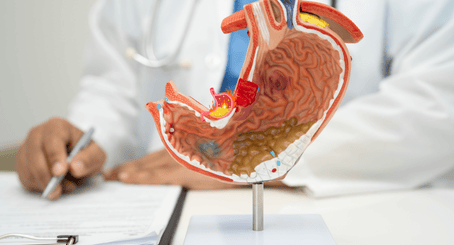
Symptoms That Need Medical Attention
People with a gastric ulcer may experience the following symptoms:
Burning Abdominal Pain
Burning or gnawing pain in the upper abdomen, especially between meals or at night.
Persistent Indigestion
Persistent indigestion or bloating after eating.
Nausea or Vomiting
Frequent nausea or occasional vomiting.
Reduced Appetite
Reduced appetite due to stomach discomfort.
Unexplained Weight Loss
Unexplained weight loss without dieting.
Feeling Full Quickly
Feeling full quickly, even after small meals.
Recurring Heartburn
Recurring heartburn or acid reflux.
Dark or Tarry Stools
Dark or tarry stools, which may indicate bleeding.
Any of these warrants prompt evaluation: dark or black stools, or vomiting that looks like blood or coffee grounds, should be treated as an emergency rather than waiting for a scheduled appointment.
What Causes a Gastric Ulcer?
Gastric ulcers develop when the protective lining of the stomach becomes damaged. Identifying the underlying cause is essential for effective gastric ulcer treatment and long-term prevention:
- Helicobacter pylori (H. pylori) bacterial infection
- Long-term use of painkillers (NSAIDs)
- Excess stomach acid production
- Smoking and alcohol consumption
- Severe or prolonged stress
- Poor dietary habits
- Certain chronic illnesses
Gastric Ulcer Treatment in Delhi
Gastric ulcer treatment in Delhi begins with confirming the diagnosis and identifying whether H. pylori infection, NSAID use, or another factor is responsible, since treatment differs depending on the cause. Acid-suppressing medication alone will relieve symptoms temporarily, but the ulcer is unlikely to heal fully, or may recur, if the underlying cause is not addressed.
For most patients, this means combining acid-reducing treatment with a cause-specific approach — antibiotics if H. pylori is present, or a change in pain-relief medication if NSAID use is the trigger — followed by monitoring to confirm the ulcer has healed.
How a Gastric Ulcer Is Diagnosed
Doctors may use several tests to diagnose a gastric ulcer and identify its underlying cause:
-
Upper GI Endoscopy
A thin, flexible tube with a camera is inserted through the mouth to examine the stomach lining directly and detect ulcers or inflammation, and to take a biopsy if needed.
-
H. Pylori Testing
Breath tests, blood tests, or biopsy samples are used to detect Helicobacter pylori bacteria, which is central to both diagnosis and choosing the right antibiotic treatment.
-
Blood Tests
Blood tests may help identify infection, anaemia, or other conditions associated with gastric ulcers, particularly where bleeding is suspected.
-
Stool Tests
Stool tests are used to detect H. pylori infection or signs of bleeding in the digestive tract that may not be obvious from symptoms alone.
-
Barium Swallow X-ray
This imaging test helps visualise the stomach and digestive tract to identify ulcers or structural abnormalities, and is sometimes used alongside or instead of endoscopy.
Gastric Ulcer Treatment in South Delhi
For residents of South Delhi, having gastric ulcer treatment in South Delhi available close to home matters because diagnosis and healing is rarely a single visit. Endoscopy or breath testing, a course of treatment, and a follow-up review to confirm healing is a process that is far more manageable when the clinic is not a long drive away.
Patients searching for a gastric ulcer specialist in South Delhi, stomach ulcer treatment Okhla, or a gastroenterologist near Okhla are usually looking for the same combination of things: prompt access to endoscopy and H. pylori testing, a clear explanation of the underlying cause, and a treatment plan that goes beyond short-term symptom relief.
Delhi Gastro Care is based at Fortis Escorts Hospital, Okhla Road, and is accessible to patients across South Delhi neighbourhoods such as Kalkaji, Sarita Vihar, Jasola, Greater Kailash, and New Friends Colony. Whether you are searching for a stomach ulcer doctor in Nehru Place or gastric ulcer treatment Kalkaji, having endoscopy, H. pylori testing, and treatment under one roof simplifies the process considerably.
Your Treatment Journey: What to Expect
- Initial consultation — review of symptoms, medication history, and dietary habits
- Upper GI endoscopy — direct examination of the stomach lining to confirm the ulcer
- H. pylori testing — breath, blood, stool, or biopsy-based testing to identify the cause
- Treatment planning — a personalised plan combining acid suppression and cause-specific treatment
- Treatment and follow-up — a course of medication followed by review to confirm healing
Treatment Options for Gastric Ulcer
Effective treatment depends on the underlying cause, severity of the ulcer, and any associated complications.
Antibiotics for H. Pylori
A combination of antibiotics is prescribed to eliminate H. pylori bacterial infection, the leading cause of gastric ulcers, and is usually combined with acid-suppressing medication.
Proton Pump Inhibitors
Medications that reduce stomach acid production, allowing the ulcer to heal and relieving pain, and forming the backbone of most gastric ulcer treatment plans.
H2 Receptor Blockers
Medicines that decrease acid secretion in the stomach, helping to reduce irritation and support healing, sometimes used alongside or instead of PPIs.
Antacids
Fast-acting medications that neutralise existing stomach acid to provide quick symptom relief while the underlying treatment takes effect.
Stomach Lining Protection
Protective medications that coat the ulcer and shield the stomach lining from further acid damage while healing takes place.
Endoscopic Treatment
For bleeding or complicated ulcers, endoscopic procedures can be used to control bleeding and promote healing, avoiding the need for open surgery in most cases.
Lifestyle Tips for Preventing Gastric Ulcers
- Avoid excessive use of painkillers
- Limit spicy and acidic foods
- Stop smoking and limit alcohol consumption
- Eat balanced and regular meals
- Manage stress effectively
- Maintain good digestive health overall
When to See a Gastroenterologist
Anyone with persistent upper-abdominal pain, indigestion that doesn't respond to over-the-counter antacids, or unexplained weight loss should consult a gastroenterologist rather than continuing self-medication. Dark or tarry stools, or vomiting that looks like blood or coffee grounds, should be treated as an emergency.
Choosing a Gastric Ulcer Specialist in South Delhi
Because an ulcer that is only partially treated can recur, choosing a gastric ulcer specialist in South Delhi who confirms both the diagnosis and the underlying cause — rather than prescribing acid-suppressing medication alone — makes a meaningful difference to outcomes. The best gastroenterologist in South Delhi for this condition will test for H. pylori as a routine part of the workup, not only when symptoms fail to improve.
A few things worth checking before your first visit:
- Verified medical qualification and registration in gastroenterology
- On-site or nearby access to upper GI endoscopy and H. pylori testing
- A clear explanation of the underlying cause before treatment is prescribed
- Experience managing both simple and complicated or bleeding ulcers
- Follow-up review to confirm the ulcer has healed, not just that symptoms have improved
At Delhi Gastro Care, Dr. (Brig) Pankaj Puri — a gastric ulcer doctor in Delhi practising at Fortis Escorts, Okhla — holds DM Gastroenterology training from PGIMER, Chandigarh, and FRCP qualifications from Edinburgh and London. He is the Director of Gastroenterology and Hepatology at the Fortis Escorts Liver and Digestive Diseases Institute and a Governing Council member of the Indian National Association for Study of the Liver. Diagnostic facilities relevant to gastric ulcers, including upper GI endoscopy and H. pylori testing, are available on-site, and Dr. Puri sees patients from across South Delhi, including Okhla, Kalkaji, Nehru Place, Greater Kailash, Sarita Vihar, Jasola, and New Friends Colony.
Frequently Asked Questions
Find answers to common questions about gastric ulcers, including their symptoms, causes, diagnosis, and available treatment options.
A gastric ulcer is an open sore that develops on the lining of the stomach. It occurs when the protective layer of the stomach is damaged, allowing stomach acid to irritate the underlying tissues.
Common symptoms include burning stomach pain, bloating, nausea, loss of appetite, indigestion, and in severe cases vomiting or black stools due to internal bleeding.
Gastric ulcers are commonly caused by infection with Helicobacter pylori (H. pylori) bacteria or prolonged use of nonsteroidal anti-inflammatory drugs (NSAIDs) such as painkillers.
Treatment usually includes medications to reduce stomach acid, antibiotics to eliminate H. pylori infection, and lifestyle changes such as avoiding spicy foods, smoking, and alcohol.
A gastric ulcer is one type of peptic ulcer, specifically located in the stomach lining. A duodenal ulcer, the other main type, forms just beyond the stomach in the upper part of the small intestine. Both are generally caused by H. pylori infection or NSAID use.
See a gastroenterologist if you have persistent upper-abdominal pain, indigestion that doesn't respond to antacids, unexplained weight loss, or dark, tarry stools, which should be treated as urgent.
Yes, most gastric ulcers heal fully with appropriate treatment, particularly when the underlying cause — such as H. pylori infection or NSAID use — is identified and addressed alongside acid-reducing medication.
Look for a gastroenterologist with verified credentials and on-site or nearby access to upper GI endoscopy and H. pylori testing, since confirming the underlying cause is central to effective, lasting treatment.