
What Is a Liver Biopsy?
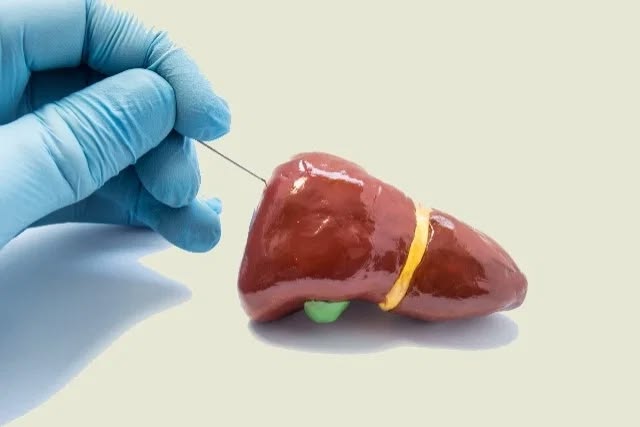
A liver biopsy is a diagnostic procedure in which a thin needle is used to remove a small core of liver tissue, which a pathologist then examines under a microscope. It remains one of the most direct ways to assess the liver — revealing the extent of inflammation, scarring (fibrosis), fat accumulation, or other structural changes that blood tests and imaging alone cannot always capture with full precision. Because the sample is examined at the cellular level, a biopsy can confirm findings that non-invasive tests can only estimate.
Why Is a Liver Biopsy Recommended?
Your doctor may recommend a liver biopsy when a precise, tissue-level diagnosis is needed to guide treatment:
Diagnosing Unexplained Liver Disease
Identifying the specific cause of abnormal liver function tests or persistently elevated liver enzymes when other tests are inconclusive.
Staging Fibrosis or Cirrhosis
Liver biopsy for cirrhosis in Delhi is typically requested to determine the exact degree of scarring in chronic conditions such as hepatitis B, hepatitis C, or fatty liver disease, since accurate staging often changes the treatment plan.
Evaluating Autoimmune or Genetic Liver Disease
Confirming conditions such as autoimmune hepatitis, hemochromatosis, or Wilson's disease that require tissue-level confirmation rather than blood markers alone.
Assessing Suspected Liver Tumors
Determining whether a mass identified on imaging is benign or malignant.
Monitoring a Liver Transplant
Checking for signs of organ rejection or recurrence of the original liver disease after a transplant.
Confirming Inconclusive Non-Invasive Results
Providing a definitive answer when FibroScan or blood-based fibrosis scores give borderline or unclear results, which is one of the more common reasons patients are referred for liver fibrosis diagnosis in Delhi.
Liver Biopsy vs. FibroScan in Delhi: How Do They Compare?
Patients comparing liver biopsy vs. FibroScan in Delhi are usually trying to understand why one test would be chosen over the other. FibroScan and blood-based fibrosis panels are non-invasive, quick, and painless, which is why they are used as first-line screening tools for most patients with suspected liver fibrosis or fatty liver disease. A liver biopsy, by contrast, involves a needle sample under local anesthesia and carries a small procedural risk, but it remains the most direct and detailed way to examine liver tissue — it can identify the exact cause of liver damage, not just estimate stiffness or fat content.
Comparison Table: Liver Biopsy vs. FibroScan vs. Blood-Based Tests
| Feature | Liver Biopsy | FibroScan | Blood-Based Fibrosis Tests |
|---|---|---|---|
| Invasiveness | Invasive (needle tissue sample) | Non-invasive (external ultrasound-based probe) | Non-invasive (routine blood draw) |
| Pain / Sedation | Local anesthesia, mild discomfort | Painless, no sedation required | Painless, no sedation required |
| Accuracy for Fibrosis | Gold standard, direct microscopic tissue view | High accuracy, indirect physical stiffness measurement | Moderate accuracy, indirect biomarker estimate |
| Can Assess Cause of Disease | Yes, provides direct cellular etiology & inflammation details | No — measures liver stiffness and fat (CAP) only | No — provides general risk stratification score only |
| Recovery Time | Observation for a few hours, avoid heavy exertion ~1 week | None (immediate discharge) | None (immediate discharge) |
| Risk of Complications | Small procedural risk of pain, bleeding, or infection | None | None |
| Best Used For | Definitive diagnosis, unclear etiology, or inconclusive tests | First-line fibrosis staging & steatosis quantification | Initial population-level screening & risk assessment |
In Short
In practice, most patients start with FibroScan or blood-based testing, and a liver biopsy is reserved for situations where results are inconclusive, the underlying cause is unclear, or a treatment decision genuinely depends on a precise, tissue-level answer.
Types of Liver Biopsy
Not all liver biopsies are performed the same way; the technique is selected based on individual patient anatomy and risk factors:
Percutaneous Liver Biopsy
The most common approach; a percutaneous liver biopsy in Delhi is typically performed under ultrasound guidance, with a fine needle passed through the skin directly into the liver.
Transjugular Liver Biopsy
Used when a patient has an elevated bleeding risk or significant fluid in the abdomen (ascites); the needle is carefully guided through the jugular vein in the neck down to the liver.
Laparoscopic-Guided Biopsy
Occasionally used when a biopsy is performed alongside another keyhole laparoscopic procedure, allowing direct visual inspection of the liver surface prior to sampling.
How Does the Liver Biopsy Procedure Work?
A liver biopsy procedure in Delhi is carried out in carefully planned steps to safely obtain a small sample of liver tissue for examination.
Pre-Procedure Testing
Blood tests are performed beforehand to check clotting function, and your doctor will review current medications, particularly blood thinners.
Preparation
You will typically be asked to fast for several hours before the procedure and may receive a mild sedative to help you relax comfortably.
Local Anesthesia
The skin and underlying tissue over the biopsy site, usually on the right side of the abdomen, are completely numbed with local anesthesia.
Needle Insertion
Using real-time ultrasound guidance, a thin biopsy needle is carefully inserted through the skin into the liver to collect a small tissue sample.
Sample Collection
The tissue sample is withdrawn quickly, and the needle is removed; the insertion step itself typically takes only a few seconds.
Monitoring and Recovery
You will rest and be monitored at the hospital for a few hours afterward to watch for any signs of bleeding or complications before being discharged, usually the same day.
Is a Liver Biopsy Painful?
A liver biopsy is performed under local anesthesia, so most patients feel pressure or a dull ache rather than sharp pain during the procedure itself. Some soreness or tenderness at the needle site is common for a day or two afterward and can usually be managed with simple pain relief as advised by your doctor.
What Are the Risks of a Liver Biopsy?
A liver biopsy is generally safe when performed by an experienced specialist, though as with any procedure involving needle insertion there are risks to be aware of. These may include pain or soreness at the biopsy site, mild bleeding, and rarely, more significant bleeding or injury to nearby organs. Your doctor will review your bloodwork beforehand to minimize these risks and will monitor you closely after the procedure.
Your Diagnostic Journey: What to Expect
A clear, coordinated step-by-step roadmap from your first visit to ongoing care:
-
1
Initial Consultation: Review of liver function tests, previous imaging, and complete medical history.
-
2
Non-Invasive Options: Thorough evaluation with FibroScan or blood-based fibrosis tests where clinically appropriate.
-
3
Pre-Procedure Testing: Complete clotting profile checks (PT/INR, platelets) and careful medication review.
-
4
The Biopsy Procedure: Safe, ultrasound-guided needle sampling conducted under local anesthesia.
-
5
Monitoring and Recovery: A few hours of focused hospital observation before same-day discharge in most cases.
-
6
Results and Follow-Up: Comprehensive pathology review and a targeted medical treatment plan based on tissue findings.
Cost of Liver Biopsy in Delhi
Liver biopsy cost in Delhi varies from case to case, since it depends on several clinical and procedural variables rather than a single fixed figure:
- The type of biopsy performed (percutaneous, transjugular, or laparoscopic-guided)
- Whether the procedure is done as a day-care case or requires a longer hospital stay
- Pre-procedure investigations, such as clotting tests and abdominal imaging
- Sedation, ultrasound guidance equipment, and post-procedure monitoring
- Pathology and specialized histopathology reporting charges
- The hospital or facility where the procedure is performed
Liver Biopsy in South Delhi: Choosing Dr. (Brig) Pankaj Puri
For residents of South Delhi, having liver biopsy care available close to home matters because the process involves pre-procedure testing, the biopsy itself, several hours of post-procedure monitoring, and a follow-up review of results — a sequence that is far more manageable when the clinic is not a long drive away.
What to Check Before Choosing a Specialist:
- Verified medical qualification and registration in gastroenterology or hepatology
- Documented, hands-on experience performing ultrasound-guided liver biopsies
- On-site access to pre-procedure testing, ultrasound guidance, and post-procedure monitoring
- A clear explanation of why biopsy is needed rather than FibroScan or blood tests alone
- Established pathology support for accurate, timely reporting of results
- Director of Gastroenterology & Hepatology at the Fortis Escorts Liver and Digestive Diseases Institute, Okhla Road.
- 38+ years of clinical experience as a leading Gastroenterology & Liver Disease Specialist in South Delhi.
- DM Gastroenterology (PGIMER, Chandigarh) & FRCP (London & Edinburgh) qualified, ensuring world-class clinical expertise.
- Governing Council Member of the Indian National Association for Study of the Liver (INASL).
- All-in-One Liver Diagnostics: Diagnostic facilities including ultrasound guidance, FibroScan, and on-site pathology support are all available at the same centre.
- Conveniently accessible across South Delhi, serving patients from Okhla, Kalkaji, Nehru Place, Greater Kailash, Sarita Vihar, Jasola & New Friends Colony.
Frequently Asked Questions
Find answers to common questions about Liver Biopsy, including why it's performed, what to expect, and when it can be avoided.
A liver biopsy is a medical procedure in which a small sample of liver tissue is removed using a thin needle and examined under a microscope to diagnose or assess the severity of liver disease.
A liver biopsy is performed to diagnose the cause of abnormal liver function tests, confirm the stage of fibrosis or cirrhosis, evaluate unexplained or autoimmune liver disease, assess suspected liver tumors, or monitor a liver transplant.
The procedure is performed under local anesthesia, so most patients feel pressure rather than sharp pain during the biopsy itself. Some mild soreness at the needle site is common for a day or two afterward.
The biopsy procedure itself usually takes about 15 to 20 minutes, though patients are typically monitored at the hospital for a few hours afterward. Most people go home the same day and resume normal activities within a day or two, avoiding heavy lifting for about a week.
Not always. Non-invasive tests such as FibroScan and specific blood panels can often estimate liver fibrosis and fat content without a biopsy. A biopsy is generally recommended when results are inconclusive, the exact cause needs to be identified, or a treatment decision depends on direct tissue examination.
Liver biopsy cost in Delhi depends on the type of biopsy, whether it is done as a day-care procedure, pre-procedure testing, and pathology reporting charges. Because these vary by case, it is best to get a personalised estimate during consultation.
A percutaneous liver biopsy is performed through the skin under ultrasound guidance and is the most common approach. A transjugular liver biopsy is performed through a vein in the neck and is generally reserved for patients with a higher bleeding risk or significant abdominal fluid.
Look for a gastroenterology specialist with verified credentials, documented hands-on experience performing the procedure, on-site ultrasound guidance and monitoring, and established pathology support for accurate reporting.